
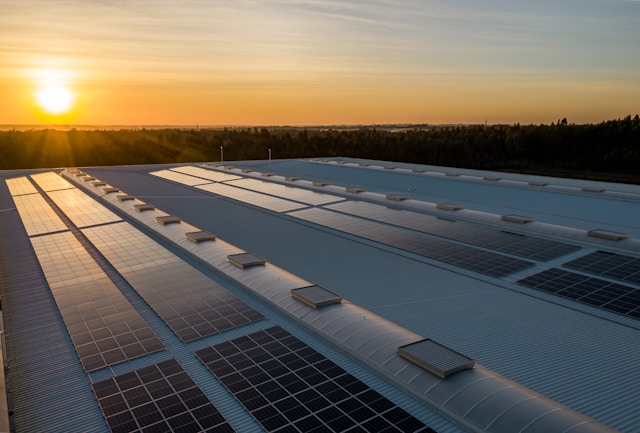
Industrial Solar Panel: Why Factories Are Switching to Solar
Factories are the engines of the global economy, but their immense productivity comes at a cost: massive energy consumption. For decades, manufacturers have been at the mercy of volatile electricity grids and fluctuating energy prices, treating high utility bills as an unavoidable expense. However, a powerful shift is underway across factory rooftops and sprawling industrial campuses around the world. The installation of the Industrial Solar Panel is rapidly moving from a niche environmental statement to a mainstream business strategy. This transition is fueled by a powerful combination of financial incentives, technological advancements, and a growing demand for corporate sustainability.
Factories and manufacturing plants are switching to solar power for reasons that go far beyond just “going green.” An Industrial Solar Panel system offers a clear path to significant cost savings, long-term energy independence, and enhanced brand reputation. It represents a strategic investment in resilience, allowing businesses to hedge against unpredictable energy markets and take control of one of their largest operational expenditures. This guide explores the compelling reasons why factories are embracing solar energy and how this switch is reshaping the future of manufacturing.
The Powerful Financial Case for an Industrial Solar Panel
While environmental benefits are important, the primary driver for most business decisions is the bottom line. The financial argument for installing an Industrial Solar Panel system has become overwhelmingly positive, offering both immediate savings and long-term returns.
Drastic Reduction in Electricity Costs
The most direct benefit of solar power is the immediate reduction in electricity bills. Factories consume enormous amounts of power, often operating around the clock. This makes them particularly vulnerable to rising electricity tariffs and peak demand charges.
- Generating Free Power: Once installed, an Industrial Solar Panel system generates electricity from a free resource: the sun. This self-generated power is consumed on-site, drastically reducing the amount of energy the factory needs to purchase from the utility grid. During peak production hours, which often coincide with peak sunlight hours, the savings can be substantial.
- Mitigating Peak Demand Charges: Many utilities impose steep charges based on a facility’s highest point of energy usage during a billing cycle. By generating their own power during these high-demand periods, factories can lower their peak usage from the grid, leading to significant reductions in these punitive charges.
Long-Term Energy Price Stability
The traditional energy market is notoriously volatile, subject to geopolitical events, regulatory changes, and unpredictable fuel costs. This uncertainty makes long-term financial planning difficult.
- Locking in Energy Rates: An Industrial Solar Panel system effectively allows a factory to lock in its electricity costs for the next 25 to 30 years—the typical lifespan of the panels. The cost of a solar installation is a fixed, one-time investment. After the payback period, the electricity it produces is virtually free, providing a predictable and stable expense line item in a world of financial uncertainty.
- Hedging Against Inflation: As utility rates continue to climb with inflation, the value of the energy produced by a solar system increases. A factory that generates its own power is shielded from these annual price hikes, making its solar investment more valuable each year.
Attractive Incentives and Rapid ROI
Governments and utility companies around the world offer a range of financial incentives to encourage the adoption of renewable energy.
- Tax Credits and Rebates: Businesses can often take advantage of significant investment tax credits, which can cover a substantial portion of the upfront installation cost. Additionally, state and local programs may offer cash rebates, further reducing the initial capital outlay.
- Accelerated Depreciation: In many tax jurisdictions, solar energy systems are eligible for accelerated depreciation schedules. This allows a business to deduct the value of the solar asset more quickly, providing a significant tax benefit in the early years of the project and improving cash flow. These incentives combine to dramatically shorten the payback period, with many industrial solar projects achieving a full return on investment (ROI) in just a few years.
Gaining Energy Independence and Operational Resilience with an Industrial Solar Panel
Relying solely on the public grid leaves factories vulnerable to disruptions that can halt production and lead to massive financial losses. An on-site solar system provides a new level of energy resilience.
Reducing Dependence on an Aging Grid
Power outages, brownouts, and voltage fluctuations can wreak havoc on sensitive manufacturing equipment, causing damage and costly downtime.
- On-Site Power Generation: An Industrial Solar Panel system provides an independent source of power during daylight hours. While most grid-tied systems shut down during a power outage for safety reasons, they can be paired with battery storage solutions to create a microgrid.
- Creating a Microgrid: By integrating an Industrial Solar Panel with industrial-scale batteries, a factory can create its own microgrid. This allows the facility to disconnect from the main grid during an outage and continue running its critical operations on stored solar power. For a manufacturer, avoiding even a few hours of downtime can justify the entire cost of the battery storage system.
Uninterrupted Power for Critical Operations
The ability to maintain power during a grid failure is a significant competitive advantage.
- Protection for Sensitive Processes: In industries like pharmaceuticals or food processing, an interruption in power can ruin an entire batch of products, leading to millions of dollars in losses. A solar-plus-storage system ensures that refrigeration, climate control, and other critical processes remain online, protecting valuable inventory.
- Meeting Production Deadlines: In a just-in-time manufacturing world, a delay of even one day can have cascading effects on the supply chain. Energy independence ensures that a factory can meet its production deadlines regardless of the stability of the local utility grid.
Enhancing Corporate Sustainability and Brand Reputation
Modern consumers and business partners are increasingly concerned with the environmental impact of the companies they support. A visible commitment to sustainability can be a powerful marketing tool.
Meeting Corporate Social Responsibility (CSR) Goals
Adopting renewable energy is one of the most impactful ways a company can demonstrate its commitment to environmental stewardship.
- Reducing Carbon Footprint: Manufacturing is an energy-intensive sector with a significant carbon footprint. By switching to solar power, a factory can dramatically reduce its greenhouse gas emissions. This is a tangible and measurable contribution to fighting climate change that can be highlighted in annual sustainability reports.
- Attracting and Retaining Talent: The modern workforce, particularly younger generations, wants to work for companies that align with their values. A visible investment in an Industrial Solar Panel system can make a company a more attractive employer, helping to attract and retain top talent.
Gaining a Competitive Edge
A strong environmental profile can directly influence customer purchasing decisions and business-to-business relationships.
- “Green” Branding: Many companies now require their supply chain partners to meet certain sustainability targets. Having an on-site solar installation can be a key differentiator when bidding for contracts with large corporations that have their own green mandates.
- Positive Public Relations: The installation of a large Industrial Solar Panel array is a positive news story. It provides excellent fodder for press releases, social media campaigns, and community engagement, enhancing the company’s public image as a forward-thinking and responsible corporate citizen.
The Practical Advantage of an Industrial Solar Panel on Factory Buildings
Factories are uniquely suited for large-scale solar installations, making the switch both practical and efficient.
Utilizing Unused Rooftop Space
Most factories have vast, flat, and unobstructed rooftops that are otherwise unused real estate.
- Ideal for Large Arrays: These large surface areas are perfect for hosting thousands of solar panels, allowing for the generation of a significant amount of electricity without consuming valuable ground space that could be used for expansion or logistics.
- Structural Soundness: Industrial buildings are typically constructed to be robust and can easily support the weight of a solar array. A structural engineer will always verify the roof’s capacity as part of the initial project assessment.
Low Maintenance and High Reliability
Modern solar technology is incredibly durable and requires minimal upkeep.
- Built to Last: Solar panels are designed to withstand harsh weather conditions, including hail, high winds, and heavy snow. They typically come with a 25-year performance warranty, guaranteeing their output for decades.
- Minimal Maintenance Needs: An Industrial Solar Panel system has no moving parts. Maintenance generally consists of periodic cleaning to remove dust and debris that might accumulate and occasional inspections of the electrical components. This “set it and forget it” nature makes it an easy addition to a facility’s existing maintenance schedule.
Conclusion
The switch to solar power is no longer a question of if for the industrial sector, but a question of when. The convergence of economic benefits, operational resilience, and environmental responsibility has created an undeniable case for the adoption of the Industrial Solar Panel. Factories that make this strategic investment are not only lowering their operating costs and securing their energy future but are also positioning themselves as leaders in a global economy that increasingly values sustainability.
By transforming vast, empty rooftops into powerful energy-generating assets, manufacturers can take control of their electricity costs, protect their operations from grid instability, and enhance their brand reputation. As technology continues to improve and the costs of traditional energy sources remain unpredictable, the move to solar represents one of the smartest and most impactful investments a factory can make for its long-term success and survival.